Monday, May 29, 2017

OKLAHOMA!

Last Thursday we went to hear Krista Tippett speak at St. Vladimir's Seminary in Yonkers.  She was her usual eclectic self, drawing thoughts from science and from the arts, from Thich Nhat Han and from Rabbi Abraham Joshua Heschel and from Martin Luther King.  She is extremely cosmopolitan while speaking about the very personal: listening, being curious, wondering.  One thing she mentioned only in passing, though, really got my attention.  She said that she is from Oklahoma, and it seemed to me that in this context, "Oklahoma" was shorthand for one thing, parochialism.  And I'm not sure.

I have been thinking about the many Oklahomas that exist in the exact same geographic coordinates, so separated, in fact, that people who are right next to one another actually live in different universes from. The Oklahoma of the imagination only magnifies this.  Consider Merle Haggard's 1969 song, "Okie from Muskogee."  He was turned off by protests against the Viet Nam war and wrote and released what was received as a kind of patriotic redneck anthem.  Weirdly, though, Muskogee is not an especially white place.  It was the capital of the Creek Indian Nation and is still the home of a sizable Native American minority.  Haggard himself grew up in California, although his parents were from Checotah, the part of Oklahoma that used to be the Creek Nation.  Is eastern Oklahoma white, or native?
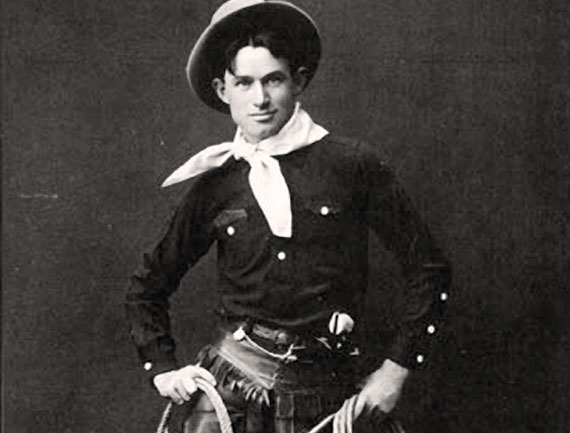
Oklahoma's most famous native son is easily still the early 20th century humorist, Will Rogers.  Rogers was famously 9/32 Cherokee Indian.  He grew up in Oologah, Indian Territory and his father was a prominent figure in the tribe.  But Clement Rogers was one of those Cherokees who fought on the Confederate side in the Civil War.  He was a delegate to the Oklahoma constitutional convention, which immediately segregated the state.  One variant of the Oklahoma license plate says "Native America."  Are Native Americans like Will Rogers actually people of color?

The first Broadway musical written by the team of Rodgers and Hammerstein was "Oklahoma!"  It takes place in Claremore, in the old Cherokee Nation.  Everybody is white, with the possible
exception of the character called Ali Hakim.  Even the horror of the plot is whitewashed.  Jud Fry attacks the protagonist, Curly McClain with a knife, but then it's Jud who dies...  and he was a moody guy, anyway... and Curly doesn't really kill him, he falls on his own knife...  and the cowboys' impromptu grand jury acquits Curly...  and Curly and Laurey ride happily away in a surrey with a fringe on top.  In the original of the play, Lynn Rigg's "Green Grow the Lilacs," the Jud character is named Jeeter Fry.  The reason why all the white characters are so outraged at Jeeter's romantic interest in Laurey is that he is part Native American.  Curley kills him for it, no ambiguity about it, and the kangaroo court exonerates him anyway.  The climactic scene, then, is the lynching of the lone Native character!  How idyllic.

Another famous Oklahoma of the imagination is John Steinbeck's The Grapes of Wrath.  It was the bestselling book of 1939 and won the Pulitzer Prize for best novel.  The film version, starring Henry Fonda, was an even bigger hit and won John Ford the Oscar for best director in 1940.  There are no Natives and no African Americans in The Grapes of Wrath. The conflicts are all matters of social class: the Joads and their fellow Dust Bowl migrants on the one hand; and the bankers, planters and sheriff's posses on the other.  It is worth noting here that the Joad's home in Sallisaw was actually outside the Dust Bowl.  But the Depression hit eastern Oklahoma sharecroppers very hard, financially and emotionally.  White sharecroppers in the old Indian Territory were especially angry at not being landowners, because many of them had Native American landlords, at least earlier in the 20th century.  Sallisaw is roughly one-quarter Native even today, almost 90 years after the events of the story.  It is hard to imagine that the Joads didn't know any Native people.  There are no people of color in the Oklahoma of this movie, or even in California.  The Joads do encounter Indians while driving through New Mexico. But it is hard to believe that real life migrants from Sallisaw, in the Cherokee Nation, don't meet any Indians until they leave home.

I mention the phrase "Dust Bowl" so I am duty bound to segue into Woody Guthrie, the Dust Bowl
Balladeer.  He is most famous for the song "This Land is Your Land."  Like Merle Haggard a generation later, Woody got into country music radio in California, but unlike Merle, Woody was born and grew up in Oklahoma.  Woody was from Okemah, in the old Creek Nation.  His father Charles was most probably a Klansman and a member of the lynch mob that killed Laura and Lawrence Nelson in that town.  Woody himself did nothing to hide that, and wrote multiple songs condemning racism (including that of his Brooklyn landlord, Fred Trump) but there is something about the imagined Woody that papers this over.  Instead he is remembered as a troubadour of the working class, a working class as narrowly imagined as that of Tom Joad.

The last white Oklahoma I want to cite is that of Susan Hinton's 1967 young adult novel The Outsiders.  She wrote this when she was 15 and 16 years old and the world of the story is the world of teens in 1960's Tulsa.  The book is still widely read and received further notice from Francis Ford Coppola's 1983 movie version.  Which young 80's star wasn't in it?  The cast included Rob Lowe, Matt Dillon, Ralph Macho, Patrick Swayze, Tom Cruise, Emilio Estevez, and (the well-known at that time) teen idol Leif Garrett.  Like several of the places named above, Tulsa was a part of the Creek Nation.  Even today its population is 20% African American and 5% Native American.  The Tulsa of The Outsiders, though, seems to be all white, and the social conflict is between the children of the country club set, called "socs," and the poorer teens known as "greasers."  This should be no surprise.  Susan Hinton wrote the book when she was a fifteen-year old junior at Will Rogers (who else?) High School.  And Rogers HS wasn't integrated until 1973, almost twenty years after the Supreme Court's decision in Brown v. Board of Education!  So in the 1965 of The Outsiders, all the African American teens in Tulsa would have attended Booker T. Washington (who else?) high school... another universe.

How about the universe, imagined and otherwise, of other Oklahomans?  Well, Ralph Ellison was from Oklahoma City and they are proud to claim him as an Oklahoman now.  In his posthumous work, Juneteenth, Ellison did address the simultaneously segregated and integrated worlds of Black,
white, and Native Oklahoma.  At one point the Reverend Daddy Hickman reminds his adopted white son, Bliss, how many white souls he saved with the hymn "Let Us Break Bread Together on Our Knees."  But Bliss has become the white-supremacist US Senator Adam Sunraider.  Hickman remembers moments of unity:
That scar on my skull to this day from going to the polls with ax handles and pistols, some whites and Indians with us, and battling for the right. Long back, now Oklahoma’s just a song, but they don’t sing about that.
He directly addresses the white-washed Oklahoma of the Broadway show. So Ellison knows "Oklahoma!" but does "Oklahoma!" know Ellison?   Ellison's Invisible Man won the National Book Award for 1953 and it is on most lists of the best English-language novels of the 20th century.  But how many people have actually read it? When it was published, the New York Times critic greeted Invisible Man with the oddly-ambiguous "praise" that it was "the most impressive work of fiction by an American Negro which I have ever read."  Wow.

Twenty years ago, Toni Morrison wrote Paradise.  That seems like a really strange title for a novel that takes place in an all-Black Oklahoma town, but which opens with the line, "They kill the white girl first."  I don't know what tiny proportion of Americans even knows about the existence of all-Black towns.  Many of them were in Oklahoma, both because of the large number of Black folks who were members of the Creek, Seminole, Choctaw, Chickasaw and Cherokee tribes; and because of the large numbers of Black folks who moved to Indian Territory after the post-Civil War rise of the Klan in the old Confederate states.   Toni Morrison won the Pulitzer in 1988 for Beloved.  She won the Nobel in 1993.  But despite her brilliance (and the lasting brilliance of her work) she is probably more famous for Oprah asking her viewers to read the books than she is for the books themselves.  
Oprah made a beautiful, critically-acclaimed film out of Beloved, but it bombed at the box office, taking in a grand total of $22 million on a budget of $88 million.  The movie "Beloved" was beaten on its opening weekend by "Bride of Chucky."  Then theaters decided to stop showing it to make room for Adam Sandler's "Waterboy."  I have no words.  But there is no better way to explain why (white) people don't get Paradise.  Even its inclusion in the Oprah Winfrey Book Club didn't stop readers, including literary critics, from being confused.  The social conflicts in Paradise are between men and women and between the richer (and lighter-skinned) people of Haven and those of the novel's setting, the town of Ruby.  What were white people to make of this?  

The only film I can compare it to is John Singleton's (also 1997) "Rosewood."  The all-black town in this story is in Florida instead of Oklahoma, but still.  Starring Jon Voight and Ving Rhames, Don Cheadle and Bruce McGill, it had enough white characters for success, even if Bruce McGill did play a white supremacist murderer.  And it was about white folks attacking Black folks, which is -- at least -- a familiar story line.   There is plenty of fighting back, but the Black folks are defeated and their town is destroyed.  This is a narrative that people understand better than an all-Black town still extant after the Viet Nam war, as in Paradise.

I also want to mention John Hope Franklin, born in the all-Black town of Rentiesville, Oklahoma and raised in Tulsa.  He graduated from (of course) Booker T. Washington High School, and received his PhD in history from Harvard in 1941.  Both his parents were Black Choctaws.  His best-known work is From Slavery to Freedom: A History of African Americans.  If you don't know it, you should.  Dr. Franklin is important to understanding Oklahoma, too.  Not only was he from a Black Native family, but he lived with the "state Negroes," those who moved to Indian Territory from the states.  He moved to Tulsa just before the 1921 pogroms in which the African American neighborhoods were burned -- both from the ground and in aerial incendiary attacks! -- and armed white mobs moved into the streets shooting and lynching the
occupants.  Franklin's dad, BC (Buck) Franklin was an attorney, and he saw his father mount the legal cases that allowed some Black Tulsans get their property deeds when it seemed that the Klan wanted to permanently purge them from the city after burning them out.  I believe that Professor Franklin is largely responsible for preserving the memory of the "Black Wall Street" in Tulsa and of the the attacks that left it a smoking ruin.

What of Native Oklahoma?  Nowadays few people still read the Creek Indian poet Alexander Posey unless they are taking a course in Native literature.  He was the editor of the daily newspaper Eufaula Indian Journal.  He was secretary to the constitutional convention for the proposed Indian state of Sequoyah, a proposal which Congress ignored when it merged Indian Territory and Oklahoma Territory into the new state of Oklahoma in 1907.  Posey may have been best known for his Fus Fixico letters.  They were dialect humor, published as letters to the editor in the voice of a Creek full-blood.  Much of this humor was so topical that -- unless you study the politics of the Creek Nation in the first decade of the last century: Crazy Snakes, Legus Perryman, Chief Porter -- it is impenetrable.  Some of it, though, alludes to issues that people today will understand.  In April 1903 "Fus" wrote:
Well, so Big Man at Washington was made another rule like that one about making the Injin cut his hair off short like a prize fighter or saloon keeper. Big Man he was say this time the Injin was had to change his name just like if the marshal was had a writ for him. So, if the Injin’s name is Wolf Warrior, he was had to call himself John Smith, or maybe so Bill Jones, so nobody else could get his mail out of the post office. Big Man say Injin name like Sitting Bull or Tecumseh was too hard to remember and don’t sound civilized, like General Cussed Her or old Grand Pa Harry’s Son.
People can still relate to the name changes and the hair cuts that were meant to end one's Native identity.  And I love the subtle joke alluding to hiding that identity "if the marshal was had a writ."  But I am endlessly repelled by Posey's racism against both African Americans and Black Creek Indians.  Here is a sample from January of that same year:
So I was to Eufaula last week and stay all night in wagon yard with white folks and Arkansawyers that was come to town to get in debt for sowbelly and tobacco and molasses and things like that. We was walk 'round and see everything.  We was go to depot and look at trains, but we was see nothing but lots a niggers.  Maybe so they was fixing to go to Africa, or maybe so Muskogee or Wildcat.
 Wildcat was an all-Black town and Muskogee, the Creek capital, had a large Black population, too.  There is so much of that stuff in Posey's comedy that it becomes nearly impossible to read without concluding that he thinks he it white.  But he also talks about why the white papers love stories about Indians that strike oil on their land, while somehow never hearing about people "behind the hills" who lose their corn patch because somebody else files for an allotment on their land.  So, again, another Oklahoma.

The history of that Oklahoma of stolen allotments was written by Angie Debo in her book And Still the Waters Run in 1936.  White Oklahoma was still so hostile to allowing this story to be told that the University of Oklahoma withdrew its offer to publish and the book only came out four years later, from Princeton University Press.  Debo herself, a white woman, never received an academic appointment, despite having received the prestigious Dunning Prize of the American Historical Association for her first book.  For years she was barred from teaching in Oklahoma in any capacity.

Just last month David Grann released Killers of the Flower Moon: The Osage Murders and the Birth of the FBI which tells the story of rampant conspiracy against Native oil lease holders, including being courted and married by conspirators who later murdered them and their kin.  This is all part of the Oklahoma story.  Those white Oklahomans definitely knew there were Natives among them.  When they covered up their crimes, though, they were also erasing the very existence of the people they robbed and killed.

Today when you visit the state of Oklahoma some of the important places in its history are ghost towns.  Others have been swallowed by the growth of metropolitan Tulsa and Oklahoma City.  But some have been simply plowed under, not returned to prairie and forest, but hidden under crops of soy and cotton and wheat.  Other historic towns and ranches are underwater, flooded by dams on the Arkansas and Canadian and Deep Fork Rivers.  The bankers and oilmen who won the battles for the identity of Oklahoma have obscured even the existence of its previous iterations, before the arrival of the Five Tribes on the Trail of Tears, before the arrival of the Boomers and Sooners, before the arrival of the oil companies.  But the people are still with us.  Some of them may be in California or Texas or New York, but they are still people.  Some of them may now be African American instead of Black Indians.  Some may be white instead of Native.  But the stories shouldn't die.  I think they are equally compelling as stories about the Dalai Lama.  This is what I wanted to say last Thursday to Krista Tippett.

Friday, May 12, 2017

Donald Trump's firing of FBI Director James Comey on Tuesday had so many resonances with Richard Nixon's firing of Watergate Special Prosecutor Archibald Cox on October 20, 1973.  At the heart of the similarities is a President under investigation removing the chief investigator.  The differences are important, too, the biggest being that back then, Nixon's own Attorney General Elliot Richardson and his Deputy William Ruckelshaus both refused to carry out the order to fire Cox.  I cannot imagine Jeff Sessions insisting on an impartial investigation.

But I will allow other people to explore all that.  In October of 1973 my political circle had been following the Watergate investigations -- by the press, by the special prosecutor, by House and Senate committees -- very closely.  We saw the extrajudicial robberies and "dirty tricks" of the Nixon White House against the Democratic National Committee as part of something larger: secret, massive aerial bombing of neutral countries; illegal campaigns against Black, Latino and Native American movements; enemies' lists of journalists; as well as cultural phenomena of the time such as the vigilante fantasies of "Dirty Harry," "Death Wish," and "Joe."  All of these looked to us like the beginning of a protofascist moment.

In our studies, this interest in fascism led us to read the works of the Bulgarian Marxist, Georgi Dimitrov, on the United Front Against Fascism of the 1930's.  In our mass practice, this interest led us to organize a city-wide conference to see how community-based organizations were dealing with the public concern about street crime.  In our literature, we published short broadsides looking at the latest developments in the Watergate investigation from (we hoped) a working-class perspective.

When Nixon fired Cox, everything switched into a different gear.  Nixon's Chief of Staff, General Alexander Haig actually had the offices of Cox, Richardson and Ruckelshaus sealed!  The Chief Judge of the US District Court described it as a coup.  The London Times smelled "the whiff of fascism."  At Columbia University a group of law students reserved an auditorium so they could discuss a legal response, but somebody announced it on WBAI radio and they were swamped with members of the public who wanted a mass response.  And we were there.

There was general agreement on the need for a large march on demonstration, calling for impeachment.  A continuations committee was selected to plan that, with the provision that meetings continue to be open.  There were, of course, members of other circles at those meetings.  I remember the Workers World Party in particular.  After the first meeting, people requested that I chair those meetings, because of my insistence that all voices be heard and because I was able to cut through a lot of confusion and clearly identify the different viewpoints so that people could make informed choices and not get lost in a fog.  At the time, I ascribed my willingness to do this to our views about a united front.  Over the course of the last forty-four years I have come to realize that these are my personal skills and preferences.  We were able to make a plan, do publicity, secure the necessary permits and PA's and the march and demonstration took place  

I dearly wish I could find our list of speakers and performers for the demonstration.  I remember Congresswoman Bella Abzug and longtime pacifist Dave Dellinger.  The only news article I have been able to find now is from the Columbia Daily Spectator.  The author quotes Abzug as saying "we don't want a President who has made the Justice Department a private office for large corporations" which fit our view that this impeachment should not be a legalistic response to a President who had attempted to cover up what he called a "third-rate burglary" but a larger political movement for democracy.  That article quotes Dellinger reminding people that injustices are built into the system and that "shifting people around" wouldn't solve much.  Again, this was the view that we espoused, too.

We had lots of participants who disagreed with using the word "impeach" at all, arguing that it endorsed the authority of the larger system.  Friends of ours in the Attica Brigade put up a counter-slogan: "Throw the Bum Out, Organize to Fight."  This had the benefit of sounding (at least the first part) like something somebody would yell at Ebbets Field in the late forties, i.e. workerish.  Their rivals in the October League said, instead, "Dump Nixon, Stem the Fascist Tide."  So they shared our concern with incipient fascism but also shared the Attica Brigade's unwillingness to even mention a Constitutional remedy for a felonious President.

After all these years it is hard for me to take sides on this, even with my younger self.  All of these slogans worked because nobody was confused by what they meant.  Making these slogans a point of division, on the other hand, still strikes me as bizarre.  All of us wanted Nixon out.  We all wanted to participate in the popular surge against Nixon and we all wanted to raise our concerns about war, imperialism, racism and attacks on the people's movements.

What does any of this have to do with the current outrage over Trump firing Comey?  Lots of things, I think.  First, Comey may have been independent of both parties and tried to investigate both Trump and Clinton during the election, but he was FBI director and nobody's idea of the people's red hero.  Second, the Senators and Representatives of today, both Democrat and Republican, are staking out their ever-shifting positions primarily in order to save themselves and their parties... just like in 1973. Sorry, but that accounts for every bit of difference between a Democratic Congress then and a Republican Congress, now.  All the Facebook "petitions" and "surveys" posted by these people are for fundraising purposes.  These Democrats are not part of any resistance.

Trump is outrageous.  He has no fixed positions on any question of principle.  He is unprepared to hold elected office.  He doesn't even have a nodding acquaintance with the truth.  I would rather have spent these four years fighting with Hillary Clinton's repellent neoliberalism.  But we have Trump.  He is clearly attempting to squash an investigation of criminal conspiracy with a foreign adversary.  That is on top of his xenophobia, racism and misogyny.  Obstruction of justice is a felony in this country, and hate is not.  I am capable of holding more than one thought in my mind at a time.  I think we can demand that our Congress and Justice Department do their job without giving Republicans or Democrats a pass on their other attacks on us.

Tuesday, May 2, 2017

Twitter and Facebook have been abuzz for two days about Donald Trump's latest encomiums to Andrew Jackson.  Orange Hitler looks at Jackson and sees a "swashbuckler."  Presumably he thinks that he, too, is a "swashbuckler."  The key sentences in the offending interview were:
“I mean, had Andrew Jackson been a little later, you wouldn’t have had the Civil War.  He was a very tough person, but he had a big heart. He was really angry that he saw what was happening with regard to the Civil War; he said, ‘There’s no reason for this.’”
“People don’t realize, you know, the Civil War, if you think about it, why? People don’t ask that question, but why was there the Civil War? Why could that one not have been worked out?”
So people got all caught up in the statement "He saw what was happening" and reacted quickly by mocking Trump's apparent ignorance of the fact that Jackson was dead fifteen years before the secession crisis in the winter of 1860-61.  But Trump's awkward attempt later in the day to cover that error up actually doubles down on the most outrageous parts of his thinking.  When he tweeted the claim that Jackson "would never have let it [the Civil War] happen, Orange Hitler reveals his white supremacist thinking.

Anybody who says that the Civil War was "unnecessary" or a "tragedy" is saying that ending slavery was not important.  Throughout the first half of the 20th century a popular historiography saw the war as a failure of compromise.  Compromise on whose backs?  That view said that slavery would have wound itself down within twenty or thirty years anyway.  There is no evidence for that belief, but even if there were, it looks only at the tragedy of white war casualties on both sides and completely fails to look at African-American casualties in the concentration camps that white people picturesquely renamed "plantations."  It fails to look at the daily violence of slavery.  It fails to consider Black people as Americans, or even humans.  "Why could that one not have been worked out?" means that Trump thinks there should have been some sort of "deal" with enslavement.

Shortly before his execution, John Brown wrote: "I, John Brown, am now quite certain that the crimes of this guilty land can never be purged away but with blood. I had as I now think, vainly flattered myself that without very much bloodshed, it might be done."  By his second inauguration, even President Lincoln apparently understood this, saying:
If we shall suppose that American slavery is one of those offenses which, in the providence of God, must needs come, but which, having continued through His appointed time, He now wills to remove, and that He gives to both North and South this terrible war as the woe due to those by whom the offense came, shall we discern therein any departure from those divine attributes which the believers in a living God always ascribe to Him? Fondly do we hope, fervently do we pray, that this mighty scourge of war may speedily pass away. Yet, if God wills that it continue until all the wealth piled by the bondsman's two hundred and fifty years of unrequited toil shall be sunk, and until every drop of blood drawn with the lash shall be paid by another drawn with the sword, as was said three thousand years ago, so still it must be said "the judgments of the Lord are true and righteous altogether."
Andrew Jackson was a man of great violence, as were all those who succeeded in whipping others to clear land and plant and harvest cotton for their enrichment.  In his 2014 book The Half Has Never Been Told, Edward Baptist calls American slavery a "whipping machine" that yielded inhuman levels of production... literally, because those levels were only finally matched when cotton culture was eventually mechanized.  Today's Washington Post contains a reference to an advertisement that Andrew Jackson placed in the newspaper offering a $50 reward for the apprehension of one of his captives, a mixed-race man, who had escaped.  Jackson added: "- and ten dollars extra, for ever hundred lashes any person will give him, to the amount of three hundred."  Three hundred.  This is the daily violence of Orange Hitler's hero and of the slave power with which he thinks a compromise was desirable.

Jackson's violence -- and the violence of slavery -- wasn't only directed at Black people.  The forced removal west of the Mississippi of the tribes of the southeast was a massive land theft, but the Trail of Tears was also a death march.  Roughly half of the Cherokees that Jackson forced out died on the way.  Half.  And then there was Jackson's violence against other white men.  He was lionized by a certain class for threatening a steamboat pilot with a rifle because it got too close to the steamboat on which Jackson was a pilot.

In The Half Has Never Been Told, Edward Baptist uses a North Carolina politician named Robert Potter as a paradigm for the violence of white supremacy, a violence of men terrified of being reduced to the status of women or Black people.  Potter castrated two men because he believed they might have had sex with his wife.  This was especially true on the frontier, as Baptist writes:

One North Carolina migrant wrote back home that in his new Alabama community, “no man [is] safe from violence, unless a weapon is conspicuously displayed on his person.” In North Carolina, he continued, “it is considered disreputable to carry a dirk or a pistol. [But] in Alabama, it is considered singularity and imprudence to be without one: in fact, nine persons in ten . . . you will see with the dirk handle projecting from their bosoms.”

And Baptist quotes the language of a former Black captive to clarify the psychology of this violence:

“They’re mighty free with pistols down there,” an escaped slave told an audience in 1842. “If a man don’t resent anything that’s put upon him, they call him ‘Poke-easy.’” The way white men saw it, being poke-easy was for men toiling in the field, and for the women out there, too— people either forced or willing to be the helpless target. Dirks, pistols, and physical assault asserted that one was un-poke-able.

So Trump reveals more about himself than he intends with his hero worship, whether of Vladimir Putin, or Kim Jong Un, or Rodrigo Duterte.  His reveling in bomb dropping is of a piece with his boasting about sexual abuse.  And he reveals more than he intends with his "Why the Civil War?" He clearly thinks that compromising on continuing slavery would have been a good idea.

But there is one more question about that compromise and he himself asks it: "Why could that not have been worked out?"  The answer is there in the history books and it is the utter and complete intransigence of the owners of those concentration camps who styled themselves "masters."  They insisted on voting secession and seizing military posts before Lincoln was even inaugurated.  They insisted on a Fugitive Slave Law that turned every police agency in every part of the country into slave patrols and refused due process to accused "runaways."  They insisted on a Dred Scott decision that made slavery the law everywhere and that denied Constitutional rights to any African American person.  They insisted on war.

Trump is an easy target for his lack of knowledge of the basics of history.  But I think we should be looking closely at his views of history as well.


Monday, April 17, 2017

Reach Out!

Mt. Washington is bipolar, a mountain that is a challenging hike, but that absolutely anybody can summit.  It has its own, rapidly-changing weather, deadly in winter.  Hell, in summer the it can be dangerous with dramatic drops in temperature over a few minutes and hurricane-force winds.  But you don't have to be an alpinist to visit that summit.  You can drive up the auto road and stop at the top for selfies, souvenirs and snacks.  Or you can ride the cog railroad.

The walk up is steep and demanding. On the most popular route, Tuckerman Ravine, you climb 4250 feet over a distance of 4 miles.  And you must be prepared for those weather changes.  My 1983 copy of the White Mountain Guide refers to an "appalling and needless loss of life" on the mountain.  I have been caught in snow flurries in August more than once.  There is a wilderness trail, too, through the Great Gulf, that has no crowds at all.  That is a seven-and-a-half mile walk with a 5000-foot climb.  But most people agree that the Huntington Ravine Trail is the most difficult.  In fact, they say it is the hardest trail in the White Mountains.  This reputation is all due to a section that is more climb than hike, where the trail traverses a section of rock slabs and cracks.  The Guide says that "the exposure on several of the ledges is likely to prove extremely unnerving to novices and to those who are uncomfortable in steep places."  Then, of course, there is that weather.  If this section is wet, it is not just scary, it is deadly.

I was on summer vacation, sitting at home in the Bronx, when my friend Bart called from New Hampshire.  He had attempted the Huntington Ravine route and been turned back.  Would I consider driving up so we could try it together?

I would!  I did!  We were standing together in the parking lot at Pinkham Notch getting ready to go about 36 hours later.

The first mile is on the crowded -- and steep, make no mistake -- Tuckerman Ravine Trail.  It was a relief to turn off onto the Huntington Trail and get away from the parade of people.  After another hour or so we got to the talus, the field of broken rocks that is called the Fan.  It is no great pleasure to walk, but the views are great.  We had been going about three hours and the day was getting warm when we arrived at the part that had turned Bart back two days earlier.

Bart was climbing up this smooth rock slab in front of me (and above me) when his boot began slipping.  I grabbed the back of his heel and pressed the front of his sole hard against the rock, which stopped his slide. He continued up the slab.

That's my story.  I had to do the same thing maybe two more times, but the rest of the hike was uneventful.  It was a beautiful day.  It was rewarding to reach the top and look around at the rest of the Presidentials.  The walk down, by another trail, was hard on my toes.  But the story is that Bart reached out to me, I reached back, and we were able to complete a demanding climb.

In 2011 a graduating class of high school seniors, who had only known me as principal when they were freshmen, generously asked me to be their commencement speaker.  I spoke to them about the people who were closing their school, diminishing and demeaning their achievements.  I told them how much their invitation meant to me.  And I said:
So I ask you to remember that, what you did for me by reaching out and remembering me.  I want you to remember that whenever you are ready to surrender to self-doubt: to the feeling that you don't matter.  I ask you to remember that whenever you are ready to surrender to contempt for others, whenever you are ready to surrender to greed or selfishness or hatred.  There is a wolf right out there, so close you can touch him.  That wolf feeds on doubt and hatred and greed... and that wolf is always hungry.  That's the wolf that encourages us to hurt one another... or ourselves.
But that wolf is not the only one out there.  There is something else right out there, too.  And that is our love for each other, our support and our care.  All those things are right there within our grasp.  Just waiting.
I was reminded of these things last week.  For the person next to us, this moment may be rock bottom, convincing proof that all their efforts are doomed to failure, that the universe is rigged against them.  We don't have to make that person our project.  We don't have to fix everything for them.  We just have to reach out a helping hand.  We just have to grab their heel once and press their boot against the rock.  That is what changes the world from desperately inhospitable to a Garden of Eden.

Tuesday, February 28, 2017

What working class?

The day after Donald Trump’s election those pundits who align themselves with the Democratic Party began wringing their hands about how “we” (meaning they) had ignored and disparaged the “white working class.”  Apparently these columnists and talking heads had only recently discovered the fact that some white people in the United States work for an hourly wage.  They read J.D. Vance’s Hillbilly Elegy and realized that the people who they previously thought of (if they thought of them at all!) only to mock as inbred oxy addicts, might actually be real human beings with families and lives and aspirations.  So this “white working class” phrase appeared as an honorable shorthand for the people that Hillary Clinton and her neoliberal allies had driven from the Democratic Party and into the camp of the Republicans. 

I don’t like the phrase, "white working class" but I thought it would go away.  Now, though, four months have passed and people are still using it without reflection.   I would like to make a few suggestions about what saying “white working class” reveals and about what it hides. 

Why call it a “class”?

In his 1963 The Making of the English Working Class, E.P. Thompson set out immediately in his preface to struggle with the meaning of that word.  He described it as a “historical phenomenon”, writing:
I do not see class as a ‘structure’, nor even as a ‘category’, but as something which in fact happens (and can be shown to have happened) in human relationships.
And he continued this thought by arguing that a class only exists in relationship with some other class:
Class happens when some men [sic], as a result of common experiences (inherited or shared), feel and articulate the identity of their interests as between themselves, and as against other men whose interests are different from (and usually opposed to) theirs.
A working “class” doesn’t exist, then, as a range of income.  It doesn’t exist because some people work all their lives to enrich others.  It exists because people become conscious of the similarities of their lives, and of the differences in the lives of their exploiters.

You might say that an American working class existed in the mid-1930’s when miners, auto workers, steel workers, rubber workers, textile workers, dockworkers, and truck drivers were all struggling against their employers, the police, and armed thugs for recognition of their unions.  You might say that an American working class existed in the years between the Panic of 1873 and the First World War when private detective agencies unleashed a reign of terror on worker organizations with the support of the courts, the National Guard, and the United States Army.  But could you say that today?  Where would you find working people who understand themselves as a class?

Union membership rates peaked in the United States over sixty years ago, in 1955.  At that time, 40% of private sector wage workers (excluding agriculture and construction) were union members.  Today, private sector union membership (including construction) is down to 6%!  If, as Thompson wrote, class is a historical phenomenon, then it seems clear that the working class is now a phenomenon of our past.  Even where there are still manufacturing unions, in this last election cycle the union leadership bemoaned their lack of political influence over their members.  Today those workers treat their unions as they would their insurance companies: guardians in case of calamity, but not important parts of their identity in society.

Why call it “working”?

It is not just the unions that have been shrinking.  Even the industrial sectors that once provided the members of those unions -- of that past working class -- have declined in terms of employment.  Some of these industries have automated.  Some have moved to other, lower-wage countries.  Coal, as an extreme example, has lost workers both because natural gas is cheaper and because the operators simply use heavy equipment to remove the mountains instead of mining underground.

In 1923, there were over 860,000 coal miners in the United States.  Last year less than 10% that number were employed, about 81,000.  And don’t blame Obama or environmental regulations, blame gas fracking.  Coal jobs actually increased through Obama's first term.  Steel, too used to be a huge employer of American industrial workers.  In 1974 there were still half a million steel workers in this country.  Last year there were only 87,000.  A large part of this loss is due to automation, but the per capita demand for steel is down, too.  Worldwide, the last quarter of the twentieth century saw a decline in steel industry employment of one-and-a-half million!

Why point to declining employment in particular industries? Because those are the jobs that led people to identify themselves as a working class.  Working in those jobs – as  opposed to fast food or retail – helped people understand that they were a class.  And they are gone.

Why call it “white”?

This bothers me most of all.  I reject this notion that anybody other than a white man requires a qualifying adjective, that the default American is a white man.  If you picture a “worker” do you see a white man with a hard hat and a tool belt?  What about the mostly-immigrant women who – in their thousands – spent last night cleaning your office and today cleaning your hotel room?  What about the mostly Mexicans and Central Americans who harvested the food you ate today?  What about the vast majority of construction workers today who may have a tool belt but are probably not white and are probably not provided with any safety equipment whatsoever?

Let's return to the notion of  “class” that I identified earlier with conscious and active union membership.  Among all American workers today, African American workers are more likely to be union members than are white workers.  Moreover, that picture – white man with a hard hat – didn’t apply in the heyday of the United Steel Workers or United Mine Workers, either.  In southern West Virginia in the first third of the 20th century, a quarter of all coal miners were Black.  In the Alabama coal fields African Americans were more than half of the miners.  Nationwide, the 55,000 Black coal miners in 1930 were disproportionally concentrated in the most dangerous underground jobs.   Were these the people you pictured when I said “worker”?

The same thing was true in the steel industry.  In 1964, 25% of all union steelworkers were African American, although, again, Black workers were disproportionally concentrated in the hottest, most dangerous parts of the mills, where the molten steel was poured.  And, significantly, despite their numbers on the mill floor and in the union, no Black steel worker had yet been elected a national officer of the USW by 1964.

Which brings up the other side of this question.  How many unions were formed explicitly to exclude Black and Brown workers?  That was certainly the practice of unions in the skilled trades, including the building trades, right up through the 1970’s.  In the big steel mills Black workers had to fight their own union in order to secure transfers to more desirable jobs.  Workers at Sparrow’s Point in Baltimore sued the USW, not the company, to make plant-wide seniority the basis for transfers. 

The category “worker” has no color, certainly not white.  And in the United States our unions are not necessarily class organizations when color comes into the picture.

Why the Democratic Party?

This entire discussion begins with the questionable notion that the Democratic Party is a progressive organization, the home of working people.  I will say that the Democratic Party has been quicker than the Republican Party to support equal rights for LGBTQ folk.  I will say that the Democratic Party has been quicker to embrace legalization for marijuana.  I will say that Democrats have been slower to attack the science of climate change.  (Although I am not certain about Democrats and the science of vaccination.)  But I also know that Democrats have been as enthusiastic about the prison-industrial complex as Republicans.  Bill Clinton’s omnibus crime bill led to a huge increase in mass incarceration.  I know that Democrats have been just as responsible as Republicans for the neoliberal reforms that have enriched the poor and impoverished the many.  Oh, and I am a teacher.  Democrats and Republicans were happy collaborators in the education “reforms” that pushed for school privatization, more testing, and demonizing teachers.  So if we believe that workers, white or otherwise, belong in a progressive party, why would we imagine that it would be the Democrats?

I suppose editorial writers and other political pundits have to traffic in unexamined phrases, otherwise they would be clarifying and qualifying all the time.  Instead, they can refer to “Islamists” and “evangelicals” and “the Left” in ways that have no meaning at all or – at least – that elide and conflate meanings.  But this endless discussion of a “white working class” serves to make most American workers invisible.  It also obscures the fact that another class, the monopoly capitalists, have waged a unilateral class war against American workers for the last 35 years.  And the monopoly capitalists are winning.


Saturday, December 31, 2016

Headlong Pursuit

A little over a month ago I posted this on Facebook:
CITIZEN SCIENTIST!Prophet has been training for a while with Sits & Wiggles Dog Training to assist with the Gotham Coyote Project. This entails finding coyote scat so the biologists can check DNA and recent meals. He went along on a field day in Pelham Bay Park, shadowing Scout, who is the experienced dog, but they found nothing that day.Today, on a regular walk in Van Cortlandt Park, with no instruction to search, Prophet insisted on leaving the trail, zigzagging the ground with his nose. When I got bored and started to walk back to the trail, he gave me one loud bark, and continued to search. Then he looked up triumphantly, and there it was: coyote scat. I carefully put it in a poop bag and noted the GPS location.
Yes, Jorge, I treated him profusely. (We ❤️R+)
Yes, Ferdie, I treated him right at the sample.
I suppose I should confirm that the sample is, in fact, from a coyote, but I am fairly certain and I am really proud, so...
He has located more since then, near the same spot.

Today we had a different experience.  He had been following some kind of sign off and on all morning, but it is hard for me to know what: a deer? a feral cat? an opossum? some other dog?  We walked around a deer carcass that has been there for a couple of weeks and is now picked almost clean.  Then we stopped atop a steep, broken, rocky slope where we often stand to check out the Northwest Woods.  There was only a dusting of snow on the ground today from yesterday's flurries.  Here is a photo of that spot from two weeks ago when it was actually snowing in earnest.

I started down the slope just behind the rocks in the left of this photo.  Honestly, I was curious about the possibility of getting an even better camera angle than this.  Prophet seemed happy to be going somewhere new.

Suddenly, his hackles went up, he began snarling and he disappeared around a corner.  When he reappeared he was angrily pacing back and forth, looking for a way down.  I clearly should have summoned him immediately.  But my curiosity often gets the better of me and I was lost in wondering what in the world he had discovered.  So, instead of calling him off, I stood and watched while he jumped down and disappeared again.

When Prophet reappeared, he was in headlong pursuit of an adult coyote.  The coyote rocketed down that slope and then made a quick turn onto the footpath below.  Prophet was two or three lengths behind.  The coyote pivoted onto the cross country track and now I saw Prophet open his stride, using his whole body to generate speed.  Did I mention that I was shouting?  From the instant I realized that Prophet was chasing a wild predator I was bellowing: "Prophet! Come!"  Repeatedly.  To no effect whatsoever.  I saw not one twitch of an ear, not one hesitation, to indicate that he heard my voice or that he was anything but completely single-minded in his pursuit.

I was standing near the top of a steep ridge, the winter woods clear of foliage, so I could see a good long way.  Nevertheless, Prophet quickly disappeared from view as his quarry cut back in another direction around the next little hill.  I had not stopped shouting.  I didn't know what would happen next.

In a moment, Prophet reappeared, looking around.  I called to him again and I could see him respond to my voice by directing himself back up the cross country track toward me.  Unfortunately, a runner now appeared, heading in his direction.  I really don't like him to encounter runners without them seeing me and seeing that Prophet is in control, but they were both at least a hundred yards from me.  The best thing I could think of at the moment was to have the runner hear my voice and see Prophet responding, so I called him again and watched him race past the runner, almost without turning to look at him.  I wonder what was in that man's mind.

When Prophet returned to me at the top of the slope I put him in a long down-stay and hoped that this -- along with a refusal to give him a treat -- was sufficient evidence of my displeasure with his failure to respond to my first (or second... or third... or fourth...) summons.

Now I wonder these things: 
What would Prophet have done if he caught that coyote?  
Was he really trying?  (I think he has another gait, a sprint, faster than the run he was using.)  
Does this behavior constitute play or is it something more serious?
How do I encourage his curiosity and boldness without allowing him to upset the critters that live in the park?

That last is a longstanding concern.  This morning, Facebook offered me the opportunity to share an old posting of mine.  It is a picture taken last December by one of the Gotham Coyote Project's camera traps in Riverdale Park.  It clearly shows a man and a dog happily posing for a photo.  It was taken way off any established trail.  I enjoy walking away from the marked paths (figuratively, too!) but looking at that photograph a year ago made me wonder what Prophet and I were disrupting by being there.  If the biologists chose an out-of-the-way place, a location they thought belonged to the coyotes, then why were we even there?

It is the Bronx.  There is no way around that.  But there also has to be some mutual respect.  I didn't throw stones, or lay out poisoned meat, or shoot at that coyote.  And I guess Prophet gets to make some choices, too.  For me, it is an ethical conundrum.


Wednesday, December 14, 2016

Identity Politics. Political Correctness.

I first heard the term "identity politics" in the early '80's.  It was difficult to pin down its meaning, but it seemed to be a description of a view that actually shunned any theory of injustice, capitalism or racism in favor of deciding that some "groups" were privileged and others were not.  Instead of examining the historic oppression of African-Americans, Native Americans and Mexican Americans, "identity politics" seemed to just identify them as victims, therefore good guys.  The correlation was that women, gay people, physically handicapped people, survivors of domestic violence, etc., etc., etc. were also victims and therefore analogous to oppressed nationalities.  There seemed to be no class analysis attached to this, no colonial analysis, no analysis at all.  The good thing about identity politics was that it stood for equality.  The bad thing about it was that it allowed all sorts of privileged people to ignore their own privilege because they also had a non-privileged identity to claim: woman, incest survivor, etc.

About the same time that "identity politics" emerged, I noticed that the phrase "political correctness" had escaped the limited confines of the Marxist circles and made its way into the general discourse of college campuses.  This was not purely coincidental; it developed a new meaning, tied to identity politics.  Among Marxists, political correctness referred to avoidance of language that was ambiguous about the particulars of one's theory, strategy and tactics.  Did you use the word "race" when you believed that oppression was "national"?  A no-no.  Did you quote Fidel or Che?  The only acceptable sources were Marx and Engels.  (Also Mao or Enver Hoxha, depending on your circle.)  Some folks defied the plain meanings of words, preferring, for example, to say that two positions were "dialectically opposed" when they clearly meant "diametrically opposed."  They had to get a reference to dialectics in, even if they showed their failure to understand that idea just by using its name.

The political correctness of the early '80's was much more widely understood.  If it, too, delineated an "in" group, that group was much larger than the circles of the '70's.  Again, it was about avoidance of language, but this time it was about language that was offensive to the "groups" I referenced above.  It was politically correct to say "Native American" instead of Indian, and to say "African American" instead of Black.  It was politically correct to use people-first terminology instead of "handicapped."  The good thing was that it is evidently preferable to avoid labelling people with terms that they regard as misleading or insulting!  I think that is just elementary courtesy.  The bad thing about this political correctness was its failure to go beyond asking people what label they prefer.  By focusing on names, the "political correctness" of the '80's reinforced the idea that recognizing these identities would somehow do away with injustice.  It obscured the differences between systematic racism and other kinds of obstacles to equality.

Now it is 2016 and the terms "identity politics" and "political correctness" have come to play a giant part in the discourse of the racist right.  Their meanings have clearly shifted, too.  During this last presidential election campaign "identity politics" came to refer to any recognition that there is inequality in America.  More particularly, when a speaker disparages "identity politics" it means they are angry that people whom they don't consider human want to be treated as human.  Look at the people who criticize what they call "identity politics" and what they are calling out.  It is always about the rights of a group that is denied their rights.  Call attention to disparate police violence against people of color?  Identity politics, shut up!  Call attention to homophobia?  Identity politics, shut up!

The same thing is true of the new use of political correctness.  Call out a presidential candidate for boasting about his sexual assaults?  Political correctness, shut up!  Ask a presidential candidate to clarify his claims that Mexicans are rapists?  Political correctness, shut up!  The use of the term "political correctness" as a pejorative has morphed: instead of being content with mocking common courtesy its critics have graduated to mocking humanity and mocking truth.  If I ask them to treat others as humans and to speak truth, then, in their eyes, I deserve to be attacked for being "politically correct."

Language matters.  That is the reason that homophobes prefer to speak of their "religious freedom" to cruelly discriminate against others.  That is the reason that racists piously respond that "all lives matter" when confronted about the horrors of police impunity in encounters with people of color.  It should be clear to everybody that they don't care about the teachings of their gospels.  They are utterly transparent in their failure to value all lives equally.  They choose phrases that mask and prettify their intentions.

As a society we want a politics that treats all of us with respect, not one that categorizes us.  That is why the enemies of respect prefer to dismiss the movements of oppressed people as "identity politics."  As a society we want creative and free expression, not some arbitrary rules about acceptable language.  That is why the enemies of freedom prefer to dismiss calls for humanity as "political correctness."

Don't believe me?  Look at the ferocious venom our racist right reserves for the idea that every human deserves to be cherished.  Listen to the way they hurl the expression "snowflake" at young people with whom they disagree.  It is their ultimate insult.  And they have so succeeded in this that people all over the political spectrum agree, and use this in the same way!

We cannot allow ourselves to believe that the worst weakness is the demand to be seen and heard.  Stop using any of these phrases.  They are ways of capturing our minds.  During the presidential campaign the racist right was insistent on identifying the international enemies of freedom as "Islamic."  We resisted that characterization.  We can also resist their insistence that elementary decency be demonized.